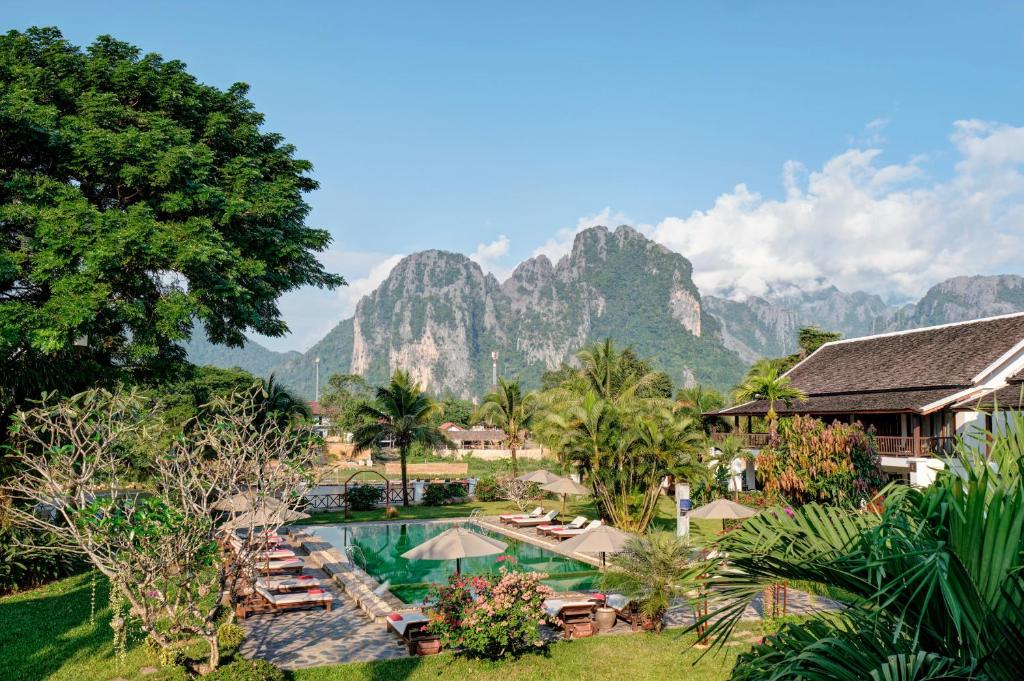
Vang Vieng got a reputation in the 2000s that almost ruined it. Riverside bars, tubing chaos, deaths in the news, government crackdowns. For a while, the landscape was an afterthought.
That era is over. The party bars closed in 2012. What's left is what was always there underneath — some of the most dramatic karst scenery in Southeast Asia, a river that's still the perfect speed for floating, and a town slowly rebuilding itself around outdoor activities and slower travelers.
What's changed: The Laos-China Railway stops here now, cutting travel from Vientiane to under an hour. Hot air balloons rise every dawn from the fields east of town. Riverside restaurants serve legitimately good food. Boutique hotels and cafés have opened, including farm-to-table spots like Organic Mulberry Farm. The crowd has shifted — fewer backpackers, more couples, families, and outdoor types.
What hasn't: The karst peaks. The Nam Song slipping through them. The way the morning mist sits in the valley until the sun burns it off around 9am. The fact that you can rent a kayak, a motorbike, or a bicycle for almost nothing and disappear into landscape that looks unreal for the price of admission.
Two days is enough to see the highlights. Three lets you slow down. Most people leave saying they wish they'd come here before Luang Prabang — because Vang Vieng is what makes Laos look like Laos.